Türkçe
 English
NDT Standards and Certification
Non-Destructive Testing (NDT) inspections must be performed according to international standards and certification systems in order to ensure reliable and repeatable results. These standards define inspection procedures, acceptance criteria, equipment requirements, and personnel qualifications.
The most widely used organizations that publish NDT standards include ISO, EN, ASTM, and ASME. Standards developed by these organizations are commonly used in industrial production and quality control processes worldwide.
ISO Standards
ISO (International Organization for Standardization) is one of the leading organizations developing international standards. Several ISO standards are widely used in non-destructive testing.
Common ISO standards include:
-
ISO 9712 – Qualification and certification of NDT personnel
-
ISO 17637 – Visual testing of welds
-
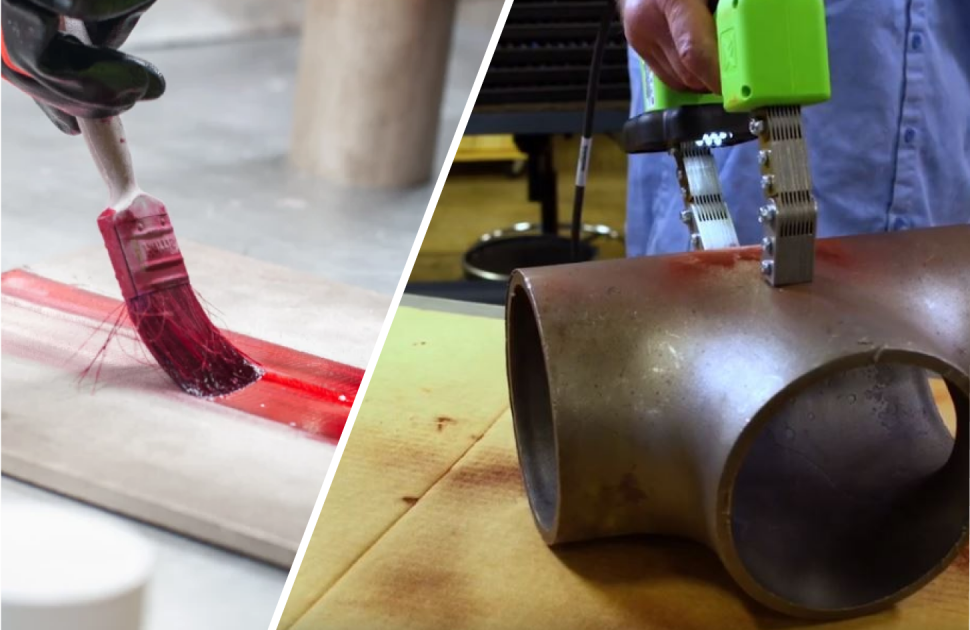
ISO 3452 – Penetrant testing
-
ISO 17640 – Ultrasonic testing
EN Standards
EN (European Norm) standards are technical standards used across Europe. Many EN standards are aligned with ISO standards and are widely used by European manufacturers and industrial companies.
ASTM Standards
ASTM (American Society for Testing and Materials) develops globally recognized standards related to material testing and inspection methods.
Examples of ASTM standards for NDT include:
-
ASTM E165 / ASTM E1417 – Penetrant testing
-
ASTM E1444 – Magnetic particle testing
-
ASTM E317 – Ultrasonic reference blocks
-
ASTM E709 – Magnetic particle inspection practices
ASME Standards
ASME (American Society of Mechanical Engineers) publishes standards widely used in pressure vessels, pipelines, and energy industries.
The ASME Boiler and Pressure Vessel Code Section V defines the rules and procedures for non-destructive testing methods.
NDT Personnel Certification
The competence of personnel performing NDT inspections is critical for reliable inspection results. For this reason, many standards require NDT personnel to be certified.
One of the most widely used certification standards is:
ISO 9712
According to this standard, NDT personnel are certified in three levels:
-
Level 1 – Performs basic inspections according to instructions
-
Level 2 – Evaluates inspection results and performs testing according to procedures
-
Level 3 – Develops procedures, supervises inspections, and provides technical responsibility
Certification systems help ensure reliability and quality in non-destructive testing applications.
NEXSEN provides engineering solutions and inspection technologies that support industrial quality control processes in accordance with international standards.